
Can Children Really Understand Big Topics Like Sustainability?
Whenever I share our EcoVenturers program outline with corporate partners or volunteers, I notice a very similar reaction. People genuinely love the idea behind the program; however, when they see themes such as green spaces and urban biodiversity, renewable energies, and waste management, a hint of skepticism sets in.
During briefing sessions for these 6-hour workshops, volunteers often ask me candidly: "Is sustainability really a topic 7 to 12 year olds can understand? Are we just teaching primary school children to repeat keywords?"
I actually love hearing these questions because it gets me excited to share how we design learning at Explorer Junior to teach difficult concepts like this, from children as young as 5 all the way up to 12 years old!
If we try to teach global challenges purely through slides or definitions, children will naturally tune out. Even most adults find it tiring and difficult to stay focused throughout such topics.
However, when you guide children through a practical framework that moves from real-world concept exploration to hands-on creation, virtual building in Minecraft, and presenting their own ideas to the class, something remarkable happens. Children start building on what they've learned to come up with their own ideas.
The "Hidden Learning" (How We Design Our Curriculum)
Underpinning this is our belief that every child is a curious explorer with the potential to create and share their own ideas.
When designing the EcoVenturers curriculum, we created a simple, natural learning flow so children aged 7 to 12 can explore complex topics without feeling overwhelmed:
Here is how our EcoVenturers workshop usually goes:
Starting with Concept Exploration: We begin with relatable, real-world context, especially relating it to what children are familiar with, such as things seen around their neighborhoods or even on a holiday trip. This gives children a familiar anchor to ask critical questions before jumping straight into the activities.
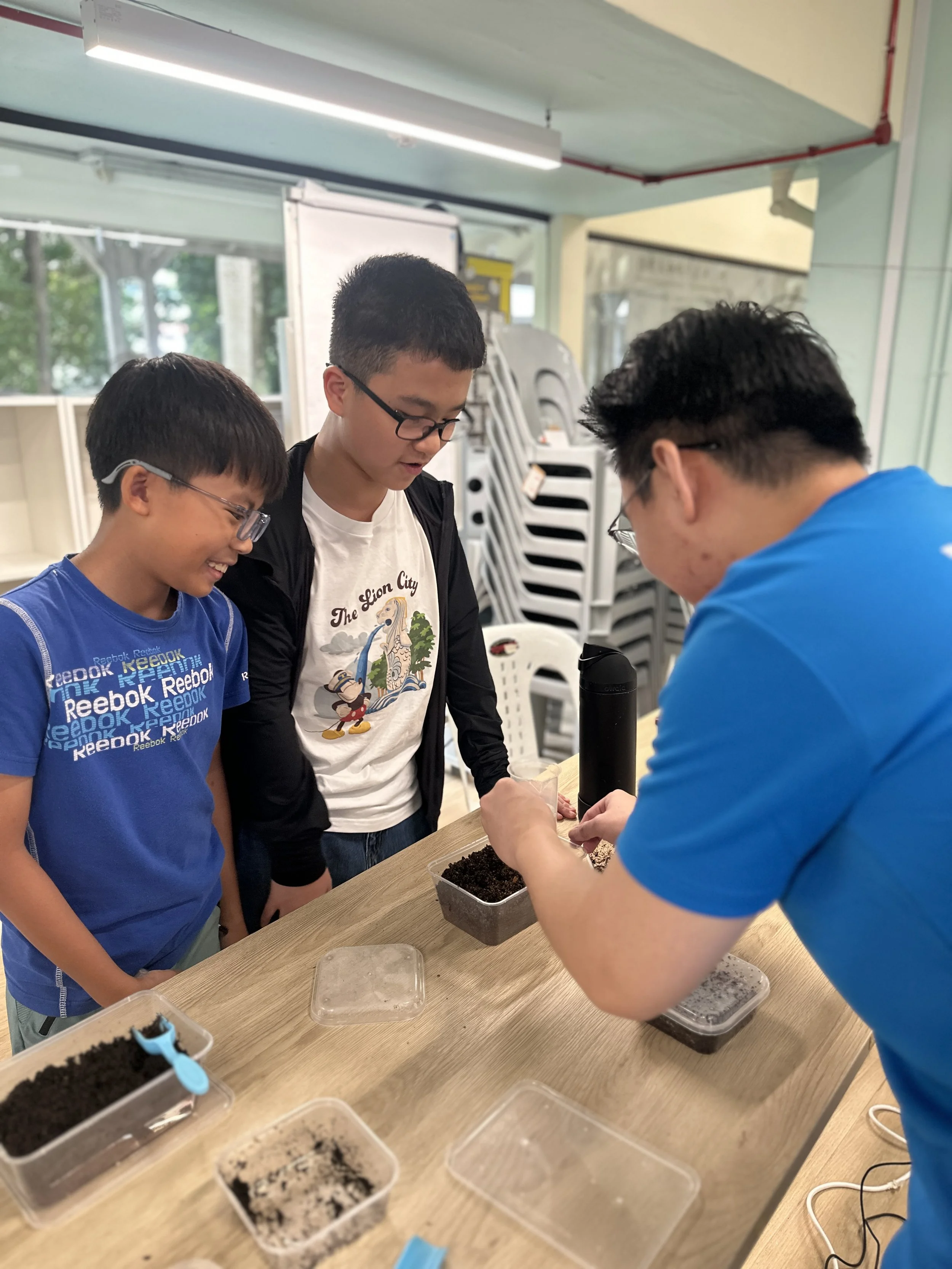
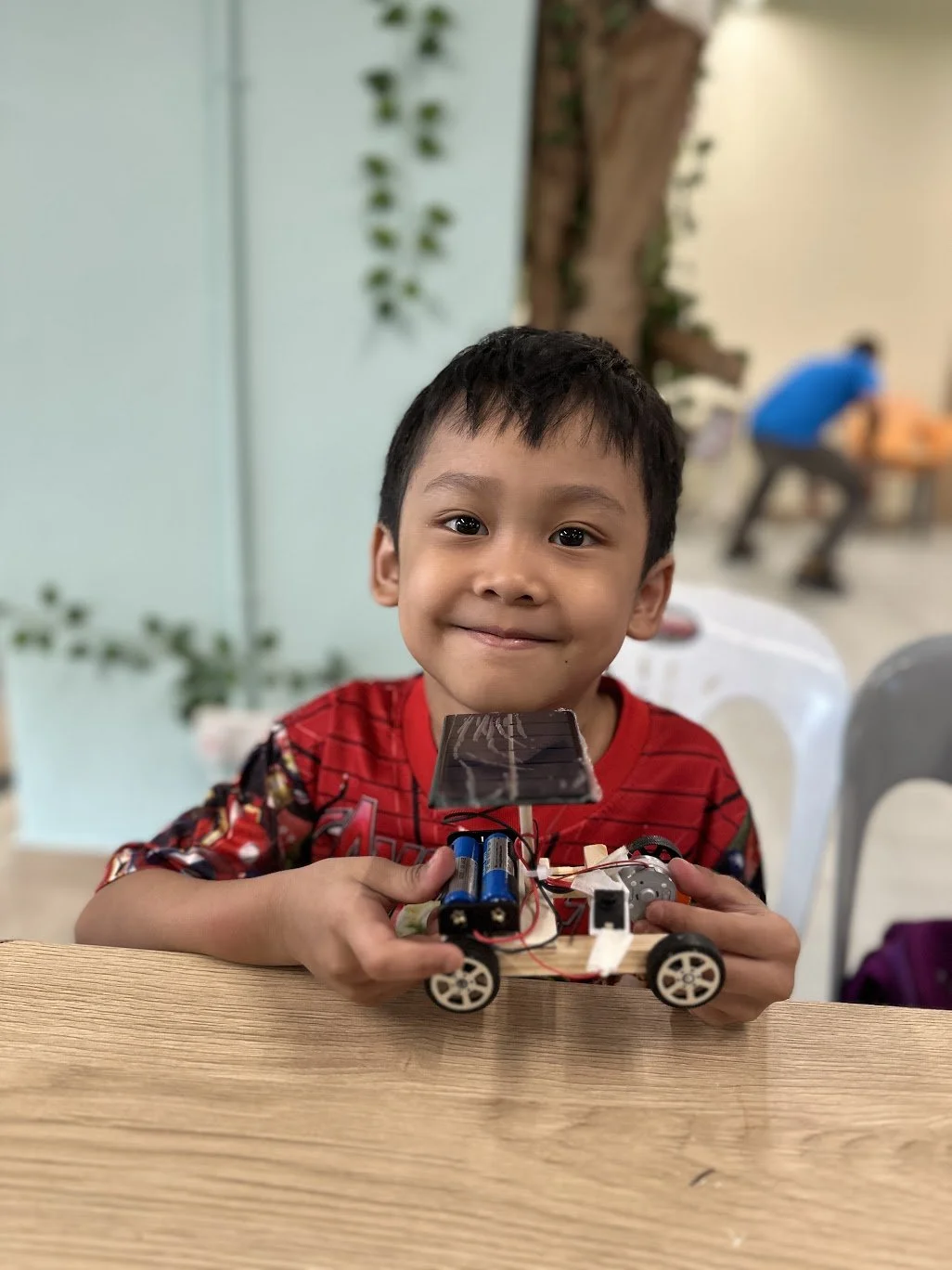
Hands-On STEM Activities: Children will get to assemble different projects depending on the concept being explored. From building a solar car or designing an upcycled self-watering pot, the children will get to reinforce what they've learned with these activities, testing their builds firsthand, turning theory into something they can see, touch, and tweak.
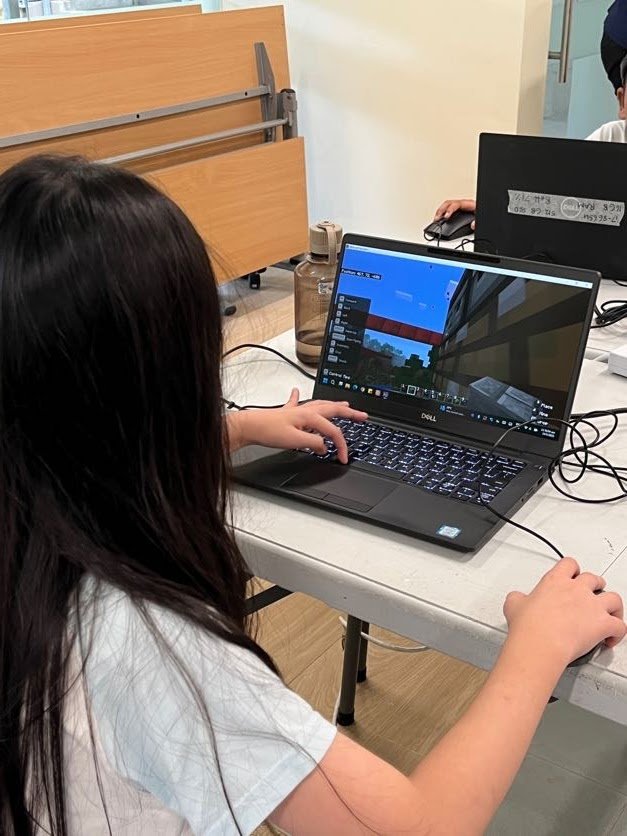
Virtual Construction in Minecraft: Inside Minecraft Education Edition, children take what they just learned and apply it to their own sustainable city. Working in small teams of 3 to 5, children learn to collaborate, compromise, and negotiate as they build structures such as automated vertical farms, solar panels, or waste management systems linking back to what they have learnt about these sustainability concepts.
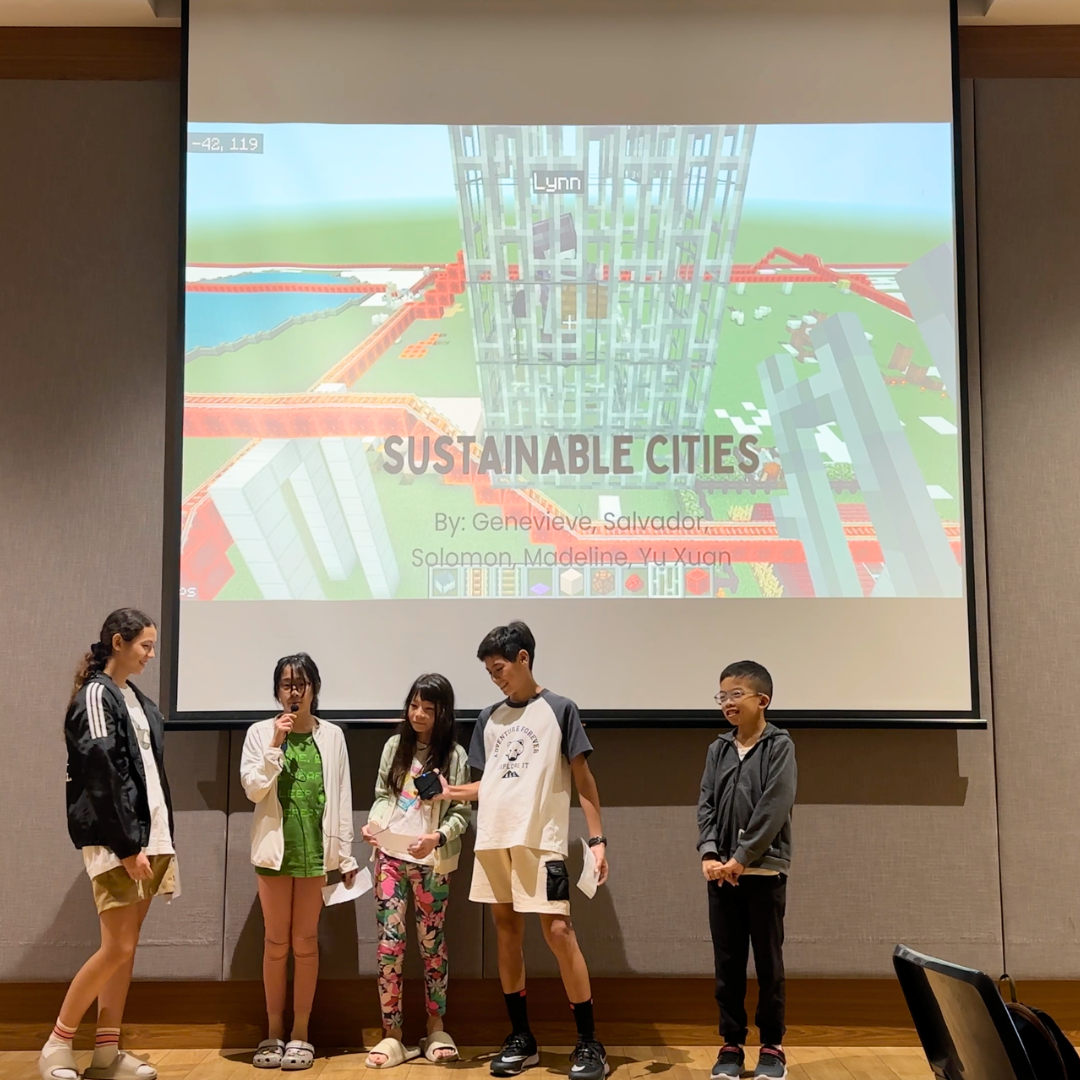
Group Presentation: Creating presentation slides and standing up to present their virtual designs shifts children from passive learners to active creators. Explaining their design decisions builds articulate communication, logical reasoning, and public speaking confidence.
Real Impact & Volunteer Debriefs
We know a framework like this works when the learning extends far beyond the workshop day itself.
For instance, after one of our EcoVenturers sessions where students built upcycled self-watering pots, a student messaged me, through their parents, nearly 6 months later to proudly show me that their potted plant was still alive and thriving at home! Seeing that tangible connection, where a 6-hour workshop turns into half a year of ongoing care and environmental awareness, reminds me of why hands-on learning matters so much.
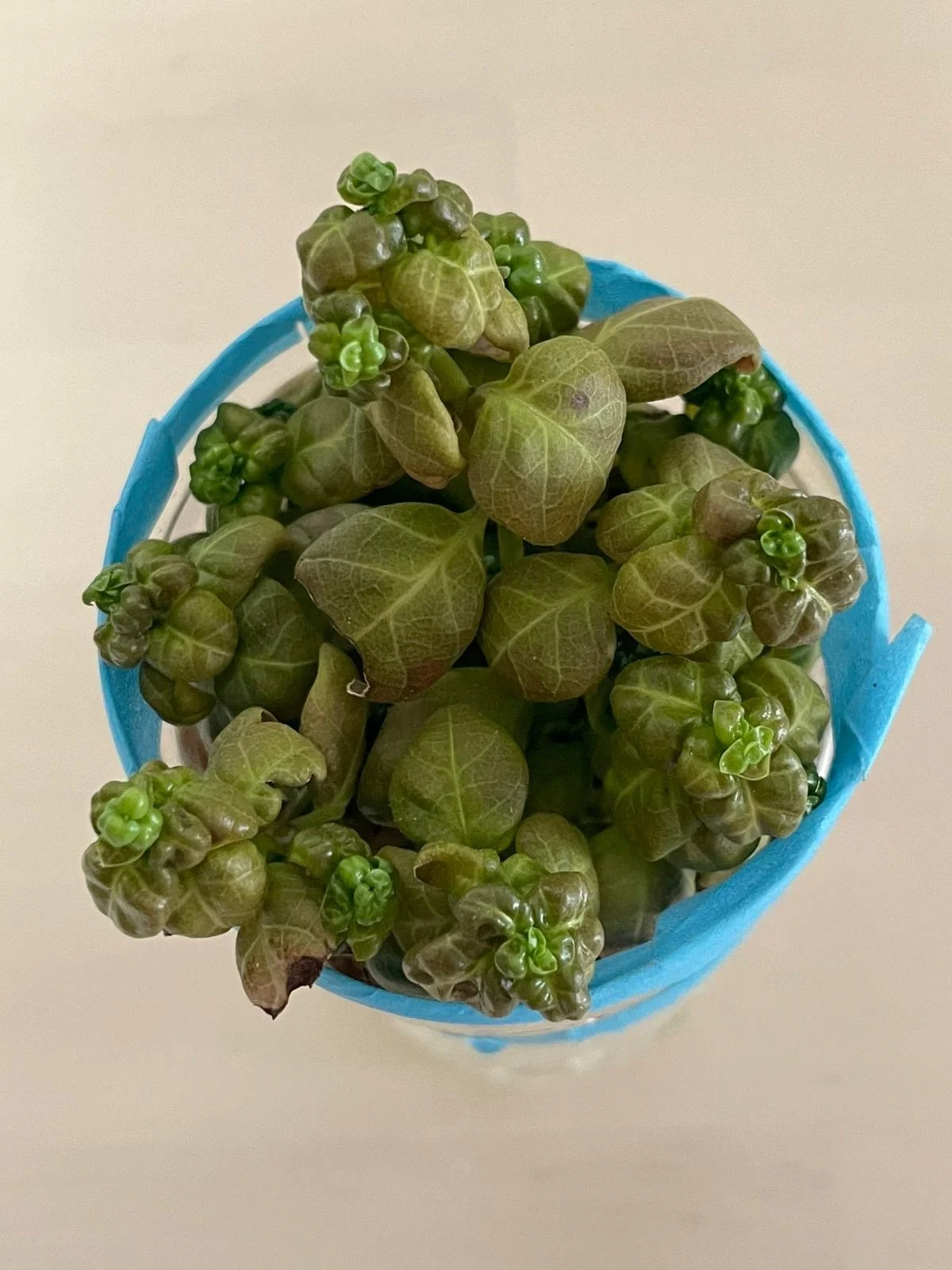
A picture of student L’s self-watering pot project after a year!
Another instance is that even when workshops are spaced quite a few weeks apart, it is incredible to watch how retention works. We've had children who attended our Green Spaces workshop and came back again for the Renewable Energy workshop weeks later, and right in the middle of the lesson, they will spontaneously draw connections back to green spaces. They remember concepts from weeks ago because they didn't just memorise this information; rather, it stuck with them because of the activities they did during the workshop.
What makes me just as happy is what happens at the end of each workshop during our volunteer debriefs.
Time and time again, volunteers express how pleasantly surprised they were. They often tell me during debriefs how amazed they are that the children managed to work together in teams, grasp complex sustainability concepts, and come up with such imaginative ideas for their virtual cities.
Hearing that feedback always gives me a proud little smile as a curriculum designer (which I always brought back to share with my CEO a little too proudly) because it proves that when we trust children with big ideas and give them the right tools to create, they will always exceed our expectations!
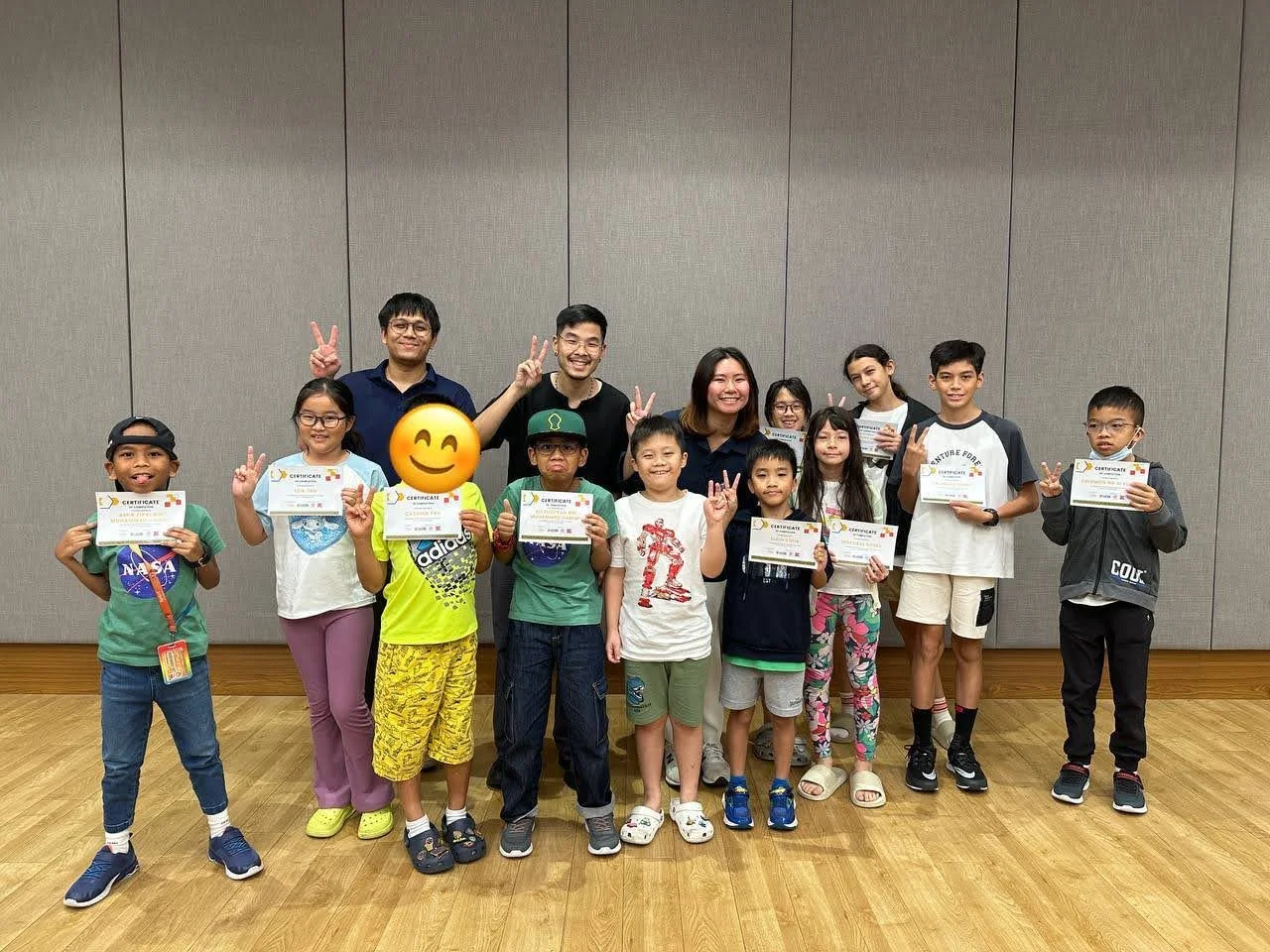
Co-Creating Meaningful Learning Experiences
Seeing children transform complex concepts into tangible creations, while watching them build confidence and curiosity in themselves, is the exact reason we built not only the EcoVenturers program, but all our programs! Whether we are running these workshops as part of dedicated corporate social responsibility initiatives or community outreach programs, our main goal remains the same: empowering young minds to learn and create with science, technology, and purpose.
Looking to bring high-impact, meaningful STEAM community outreach to your organization's CSR initiatives?
Corporate & CSR Partners: Discover how we collaborate with corporate sponsors to deliver tailored outreach workshops and family day experiences on our CSR & Impact Programmes Page.
